
Archive for the ‘Bankruptcy’ Category

Chapter 7 vs. Chapter 13 Bankruptcy

This is probably one of the most important topics to discuss with your bankruptcy attorney. It can make all the difference in how your financial future plays out.

The Means Test

First of all, you may not have a choice as to which chapter you file. The IRS sets median incomes for households for each county in the nation, and this can determine what chapter you must file. For example, in Cook County Illinois, the median income is somewhere around $45,000 for a household size of 1. In order to determine your income, the bankruptcy schedules require you to take the last 6 months of income and to multiply that number by 2. If that number, for a household size of 1, is larger than the IRS determined median income of around $45,000 then you have to finish applying what is called the means test. The remainder of that test uses a formula to determine if you have enough disposable income to repay to creditors. There are many deductions that can be used to lower this disposable income, and the test takes these into account. Some of the deduction categories that can help you pass the means test include: taxes, involuntary paycheck deductions, health care, life insurance, telecommunications, secured debt payments and childcare just to name a few. So, if your income is above the median for your household size, and you have excess disposable income after completing the means test, you do NOT qualify for Chapter 7 Bankruptcy. Thus, you may only file a Chapter 13. It is very important to make sure that your bankruptcy attorney completely fills out the means test, and applies all categories fully. If this isn’t done properly, it may be the difference between a Chapter 13 and a Chapter 7 bankruptcy.

Chapter 7 Bankruptcy

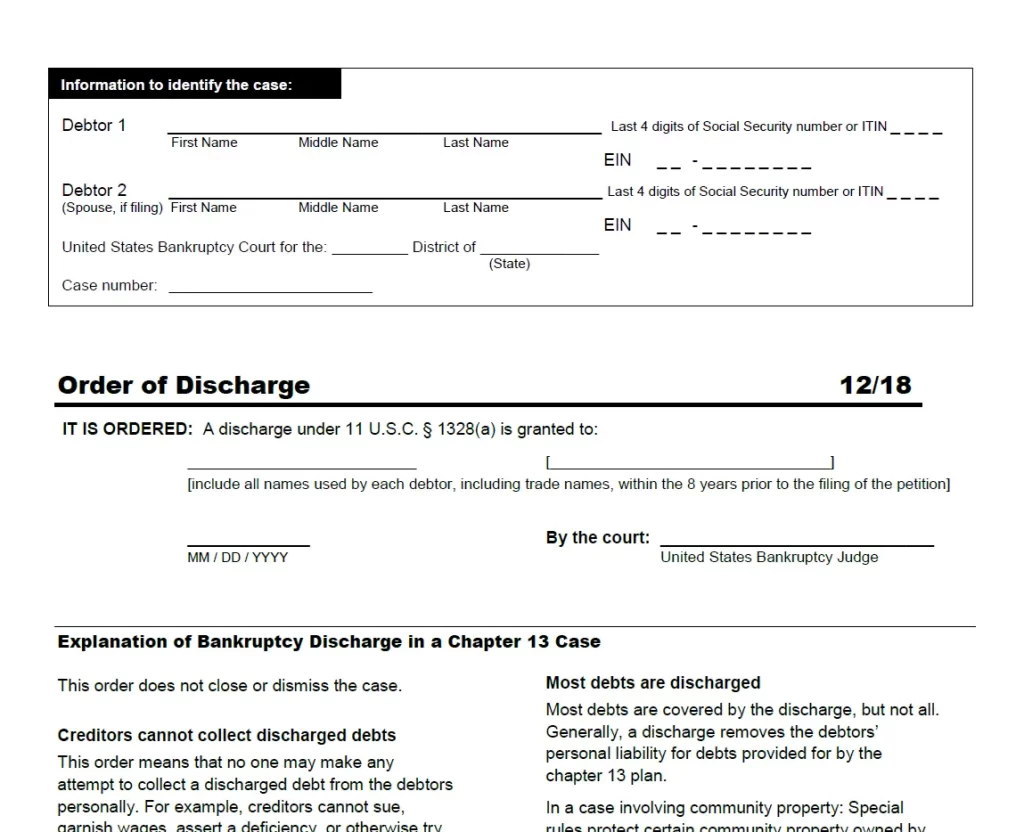
So you qualify for Chapter 7 based on your income, now what? Well, this type of bankruptcy is referred to as a liquidation bankruptcy. That means that all of your assets are administered by a Court appointed official called a Trustee. The Trustee determines if there are any assets of value that can be sold and distributed to creditors. So, your house, bank accounts, household belongings, business interests, vehicles and other items of value will be looked at by the Trustee. The law grants you certain exemptions that protect specific amounts of each property. In my experience a very small percentage of people actually lose property, and for the most part, if they do lose property this is because they choose to do so. After the trustee has determined whether or not you have any assets, which is usually done at a creditors meeting, you are then granted an Order of Discharge which completely relieves you of your personal liability on all debts.

Chapter 13 Bankruptcy

The reason I say that almost no one loses their property is because one of the major differences between a Chapter 7 and Chapter 13 bankruptcy is that you can’t lose any of your property in Chapter 13. Chapter 13 is sometimes referred to as a reorganization bankruptcy. That’s because in this type, you propose a repayment plan (that lasts from 3-5 years) to repay (sometimes as little as 10%) your debts. After each party is given proper notice, the Court holds a confirmation hearing, and if there are no objections, then the court confirms that repayment plan. Here, you make a monthly payment for the agreed amount and the Trustee divides up this money and distributes it to creditors based on what was laid out in the plan. So, not only do you need to be able to afford your Chapter 13 Plan Payment, but you also must have income. At the end of the plan period, the court will then enter an Order of Discharge excusing you from the remainder of your debts.

Choosing the Right Chapter of Bankruptcy

In closing, people file either Chapter 7 or Chapter 13 for many different reasons. Whether its to help catch up on missed mortgage payments, to walk away or “strategic default” on real estate, to prevent wage garnishment, repossession or for mere peace of mind, bankruptcy can solve all of these problems. The most important thing is to understand your goals fully and to learn how each chapter will help you attain these goals. Please call 312-493-6912 to speak with Steven J. Grace about your situation and to find out which chapter is right for you.

How Much Debt Should I Have For Bankruptcy?

This is a common question that really depends on your specific situation. There isn’t a set amount of debt that the law requires in order to qualify for bankruptcy. It’s probably best to look into your specific situation and determine if the benefits of bankruptcy outweigh the disadvantages.

Lets start by looking at the pros and cons:

Advantages of Bankruptcy

- Enables you to get a handle on your financial situation by giving you a set payment amount (Chapter 13 payment plan) or by discharging your debts entirely.

- Gives you a “fresh start” which helps you move away from a poor credit history, by establishing new positive credit on your credit report.

Disadvantages of Bankruptcy

- Bankruptcy can stay on your credit report for up to ten years.

- It has been estimated that your credit score is lowered by up to 100 points for as long as it stays on the credit report.

The Broader Picture

These factors must be viewed objectively from a broad viewpoint. For example, many people are deterred by the detrimental effects a bankruptcy can have on your credit report, but did you know one late payment can remain on a credit report for up to 7 years? Also, it has been suggested that just one missed mortgage payment can lower your credit report by up to 100 points upon the first missed payment. So before you jump to conclusions about your credit being ruined you should look at the entire picture. As a matter of fact, I would say that at least 85% of all credit scores actually increase after bankruptcy. That’s because a major component of a FICO score is the total amount of debt, which is used in the calculation of your ability to repay. Thus, once you have removed your debt from your credit report through bankruptcy, it will actually increase your ability to repay, and as you build a positive credit history, your score will in turn increase. As strange as it may sound, many of my Clients receive credit card and auto loan offers in the mail before they have actually completed their bankruptcy!

Some of the other benefits bankruptcy can offer besides helping with debt:

- It stops all foreclosure actions, including sales and can even help you catch up on missed mortgage payments (in Chapter 13).

- It can help you recover a vehicle that has been repossessed and to repay the past amounts (in Chapter 13).

- It can discharge some government debts, and even past due IRS taxes.

Is Debt Settlement Worth It?

After all of this the question then becomes is whether I can settle a credit card debt for less than what is owed. Many credit card companies send settlement letters where they offer to cancel all remaining debt in exchange for a lump sum payment, many times around 50% of the amount owed. In many cases, this sounds like an appealing alternative to bankruptcy, but there’s a catch. After you have settled your remaining debt, the bank will send you and the IRS a 1099 for the amount of “cancelled debt”. The IRS considers this income, and they expect you to pay taxes on it. As absurd as this sounds, you may be digging yourself a bigger hole than you bargained. Not only are you dropping a lump sum, (many times in the thousands of dollars) you also expose yourself to tax liability, where if you don’t pay this taxes on this income you are raising red flags with the IRS and possibly risking audit.

And finally, and I can’t stress this enough, do NOT fall victim to so called debt settlement programs. They will not settle your debts. What they do is put you on a payment plan, where your money is put into an escrow and these funds are used to pay off the debts once the company has reached a “settlement” with the lender. More than likely this settlement will never happen, your money will never be sent to the bank, and you will get sued, leaving you worse off than you were before. Where you could have just filed bankruptcy and had peace of mind. But these debt settlement companies prey on those who are afraid to file bankruptcy, and in my opinion these people pay a very grave price. If you have any doubt about debt settlement companies, just look into some of the lawsuits that have been filed by the attorney generals of various states against them.

I hope this information has helped you in your decision regarding bankruptcy, and if you have any questions at all you can schedule a consultation by filling out the form to the right or by calling 312-493-6912.

Debt and Marriage

I sometimes get the question “If my fiance is going through bankruptcy or has a large amount of debt can this affect me?” The answer, depends on your definition of affect. Because, of course it will influence your financial situation! It’s just whether or not it will become a problem for you as an individual.

Either indirectly or directly a persons credit situation will always come into play throughout a relationship. If you’ve always dreamed of having the house with the white picket fence, or the red sports car, your significant other’s financial situation could affect multiple aspects of the transaction including: the interest rate offered, the terms of the loan and the amount of collateral required. BUT, this is only in situations where you need a second co-signer for a loan. If your credit score is impeccable, and your income is sufficient to support the amount borrowed, you will be able to get qualified for the loan regardless. So, especially for small lines of credit (credit cards, car loans), if your credit is sufficient it’s likely your significant other’s credit woes will not come into play.

Can their debts get me into trouble?

The answer to that question is for the most part, no. Assuming that all of the debts are pre-marriage and that you haven’t personally co-signed on any of the debt personally, there is very little a creditor can do to collect a debt from you personally (i.e. sue you, or garnish your wages). That is, unless you get married and choose to title your assets jointly. Some common examples of jointly titled debts would be: joint bank accounts, joint real estate deeds and automobile titles. It is very important that you speak with an experienced attorney regarding these intricate issues because they are very complex and can lead to a great amount of headache further down the road. And no, if your fiance is going through bankruptcy personally, the bankruptcy will never be on your record, even if you marry.

What happens if we divorce?

These questions ultimately evolve into hypothetical future scenarios, “What happens if they die, or if we divorce?” Well, Illinois is an Equitable Distribution state for divorce purposes. This means that property incurred during the marriage (and this means debt too) is distributed equitably, and not necessarily equally upon divorce. So, for all intensive purposes, if your partner has a large debt load before they marry, it will not be your burden upon divorce. Debts incurred during marriage are joint debts typically, and will be distributed upon divorce (or will even survive death, assuming they are co-signed by both partners).

Is there anything we can do?

A marriage is a very fragile thing, especially in the beginning. Many factors can add stress to a new marriage, and finances are definitely one of them. A bankruptcy would give your partner a fresh financial start, before starting marriage. It’s much cleaner this way. You want to give your marriage the greatest chance of success. Please contact me by filling out the form to the right to discuss your options.

Phone:
(312) 493-6912

Fax:
(888) 462-6649


Contact Us:

Name

Email

Phone (Required)

Describe Your Legal Issue

At The Law Offices of Steven J. Grace, based in Chicago, Illinois, we represent clients throughout Chicagoland, including the cities of Deerfield, Jefferson Park, Lisle, Northbrook, Oak Brook, Park Ridge, Schaumburg, St. Charles and Warrenville; and other communities in Cook County, Dupage County, Will County, Grundy County, Kendall County, Kane County, LaSalle County and Lake County.